
Greetings all,
Locomotive Spotlight #7-2026
Burlington Northern GP50 #3148
Welcome to another installment in the ongoing Locomotive Spotlight Series. Today the spotlight will shine on BN EMD GP50 #3148.

Prototype Info
An EMD GP50 is a 4-axle diesel–electric locomotive built by General Motors Electro-Motive Division (EMD). It is powered by a 16-cylinder EMD 645F3B diesel engine, which can produce between 3,500 and 3,600 hp. 278 examples of this locomotive were built by EMD between 1980 and 1985. BN 3110-3162 were all delivered with five cab seats, the final five of these having the cab lengthened 23 in (584 mm) vs. the standard EMD cab. The GP50 retains the same overall length of 59 feet 2 inches as the GP38, GP39, and GP40 series locomotives.
EMD delivered the first GP50s to Chicago and North Western in the summer of 1980. Much of the GP50's new technology was tested and developed with the experimental GP40X.
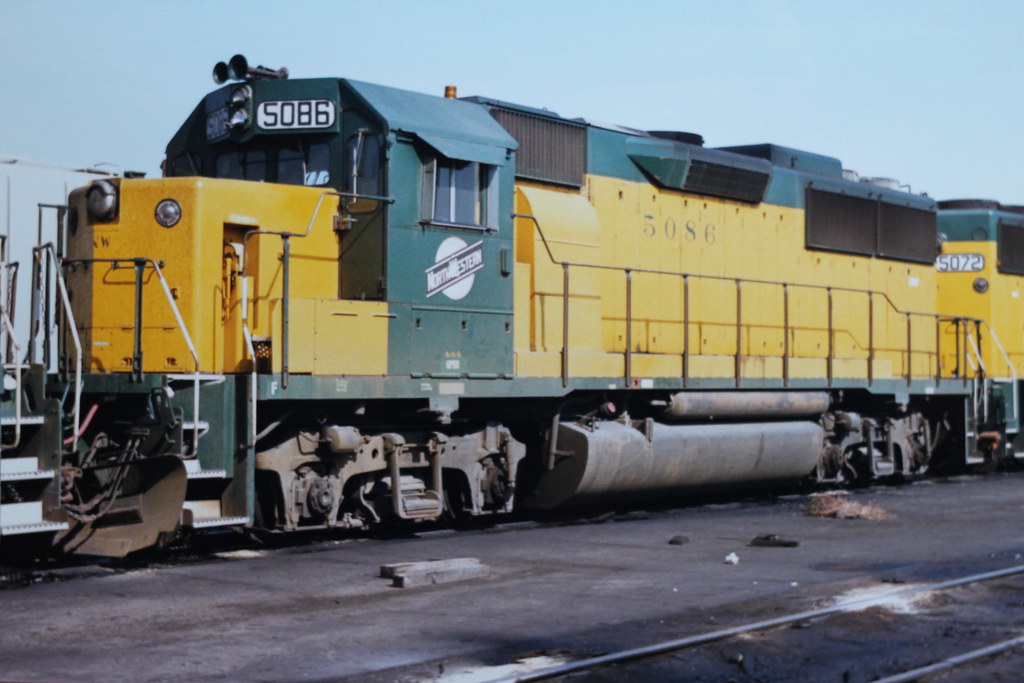
The GP50 was the first production locomotive to feature EMD's Super Series wheel slip control system, first seen on the GP40X. Super Series employs a Doppler radar unit mounted under the front coupler pocket to measure the locomotive's speed and adjusts the power to each axle to provide maximum adhesion while eliminating wheel slip. This system provided an increase in adhesion of at least 33% compared to conventional locomotives.

Other changes compared to the GP40-2 include an underframe with a lighter, deeper sill that reduced the frame's weight and a new exhaust system and "Q-type" cooling fans to meet January 1980 Federal noise regulations.

The GP50 was the first production locomotive series to be fitted with a microprocessor. EMD fitted the 60 series with microprocessors as standard following the success of LARS which was developed in partnership with Burlington Northern and Rockwell.

The Burlington Northern Railroad roster included 63 EMD GP50 locomotives numbered 3100 through 3162, built between 1980 and 1985. Road numbers 3100–3109 were originally ordered by the St. Louis–San Francisco Railway (Frisco) before the merger, with unit 3100 being the only one delivered in Frisco colors.

BN Roster Breakdown
Road Numbers: 3100 – 3162. Total Quantity: 63
Locomotive Builder: Electro-Motive Division (EMD)
Build Years: 1980 – 1985
Special Features: Units 3108 through 3157 were equipped with Auxiliary-Generator/LARS (Load Allocation and Reduction System) gear, and unit 3158 featured a unique experimental crew cab.

Model Info
The new Athearn Blue Box Burlington Northern GP50 locomotive #3148 came complete with the add on details in the yellow envelope and the long hood rails under the foam.


Looking good passing RA Tower.


Final Thoughts & Comments
The BN GP50 was purchased for powering the above BN Intermodal train with the other two BN units (SD40-2 & GP38-2) coming from my oldest son's BN fleet. The three locomotive consist is needed to move the train easily and get it up and down the slide. The two four axle units struggle with the train even on level track. Perhaps too much power and not enough axle to quote Big Mike Bednar of the JPM Videos.
The GP50 can also be partnered with an ex BN HLCX SD40-2 and a BNSF GP38-2 on the BN Intermodal train or another late 1990s freight train. The former is part of the oldest guy's BN fleet and the latter is part on the BINO man's fleet.
Lastly while the Athearn BB locomotives lack many separately added details and no electronics they are rugged and good runners. I'm also a big fan of the metal handrails which don't break or wave at you.
Additional Links & Info
BN GP50 #3148 Unknown Place and Date
BN GP50 #3148 at Lincoln, NE 1992

BNSF GP50 #3148 at Mendota, IL 2009

Thanks for reading & watching!!!
See you soon!!!
Very interesting information on the EMD GP50. On the HO modeling side, the detail job you did on your BN GP50 looks really good. I know decaling the number boards can be a challenge at times, since I have done a few in the past, but the results were always worth the effort. Thanks John!
ReplyDeleteThanks for the compliments Robert!!!
DeleteYes. I dislike it when the railings wave at me or try to move structures, bystanders, and scenery.
ReplyDeletePlus they don't take paint well if the color needs to be changed for safety reasons like at the steps.
Delete