New York Central Alcos

New York Central Alcos
NYC RS32 #2040 leads a trio of R32s hauling Train NY-4

Saturday, May 6, 2023

Locomotive Spotlight #4-2023 / EMD GP30

 Greetings All,

Welcome to another Locomotive Spotlight!!

Or everything you wanted to know about the GP30 but were afraid to ask!

Todays spotlight will shine on the General Motors Electro Motive Division GP30 that was introduced in 1961 and the models in my 1:87 scale fleet.

This uniquely styled second generation locomotive was both liked and disliked by railfans and railroaders and could inspire spirited debates about looks and performance. One thing is for sure no matter where your opinion resides the GP30s lasted a very long time in revenue service on a very diverse group of railroads.

The EMD GP30
Originally planned to be produced as a GP22 reflecting its HP output and following the GP20 identification the more powerful 2,500 HP General Electric U25B introduced in 1959 made the EMD GP22 sound inferior so in a game of corporate one up man ship the GP22 became the GP30. 

The GP30 is a 2,250 HP four axle diesel electric locomotive that was built at the EMD plant in Lagrange, Illinois between 1961 and 1963. The GP30 featured a unique cowl design and was the subject of a proper new model roll out at the General Motors Technical Center in Warren, Michigan on October 18, 1961. EMD produced 948 GP30s during 1961-1963.

The GP30 weighed 260,000 pounds, was powered with an improved  567D3 V-16 prime mover and rated at 65,465 pounds of tractive effort and 51,700 pounds continuous tractive effort. I add this in because some railroaders have termed the GP30s to be slippery.

The Reading Railroad was the first to order the GP30 purchasing a total of twenty units numbered 5501-5520.
"Reading Lines 5513 (EMD GP30)" by Gary Lee Todd, Ph.D. is marked with CC0 1.0. To view the terms, visit https://creativecommons.org/publicdomain/zero/1.0/?ref=openverse.

The Southern Railway made the largest purchase of GP30s ordering one hundred twenty locomotives with high hoods(2525-2644).
"TVRM Railfest 2013: Southern GP30 #2594" by SeeMidTN.com (aka Brent) is licensed under CC BY-NC 2.0. To view a copy of this license, visit https://creativecommons.org/licenses/by-nc/2.0/?ref=openverse.

The ATSF purchased eighty five GP30s (1200-1284) in 1962 and 1963. Renumbered to 2414 this GP30 is now part of the BNSF fleet.
"Santa Fe GP30" by Patrick Dirden is licensed under CC BY-NC-ND 2.0. To view a copy of this license, visit https://creativecommons.org/licenses/by-nd-nc/2.0/jp/?ref=openverse.

The B&O purchased seventy seven GP30s (6900-6976).
"Baltimore & Ohio EMD GP30 6972" by Digital Rail Artist is marked with CC0 1.0. To view the terms, visit https://creativecommons.org/publicdomain/zero/1.0/?ref=openverse.

Former B&OCT Chief Dispatcher Thomas A. White wrote in the B&O Historical Society magazine "The Sentinel" that when assigning motive power east from Chicago the desire was to power the eastbound hotshots "The New Yorker" and the "New York Trailer Jet" for Sand Patch grade right out of Chicago so they wouldn't have to stop to add more power during their run east. The GP30s were undesirable because they were slippery. Their successors, the GP35s, were not preferred either due to limited fuel capacity and high fuel consumption*.
"B&O 6923 (GP30) at CNJ Communipaw Ave Engine Terminal, Jersey City, NJ on November 8, 1969" by railfan 44 is marked with Public Domain Mark 1.0. To view the terms, visit https://creativecommons.org/publicdomain/mark/1.0/?ref=openverse.

Mr. White went on to say if no GP40s were available they would assign the old workhorses like the GP7, GP9s and F7s to these hotshot trains. 

The Rio Grande purchased twenty eight GP30s(3001-3028) and used them to get thru the Rockies and not around them.
"D&RGW GP30s 3008 and 3002 and CB&Q GP30 969 at the Galesburg, IL yards of the CB&Q on June 12, 1966" by railfan 44 is marked with Public Domain Mark 1.0. To view the terms, visit https://creativecommons.org/publicdomain/mark/1.0/?ref=openverse.

The Penn Central inherited sixty two GP30s from predecessors Pennsylvania(52) and New York Central(10).  
"Penn Central GP30 2238 near Stoney, PA on the Williamsport Line on January 11, 1970" by railfan 44 is marked with Public Domain Mark 1.0. To view the terms, visit https://creativecommons.org/publicdomain/mark/1.0/?ref=openverse.

Ex NYC / PC GP30 #2190 is now in service for its third owner. 
"Conrail EMD GP30 2190" by Digital Rail Artist is marked with CC0 1.0. To view the terms, visit https://creativecommons.org/publicdomain/zero/1.0/?ref=openverse.

 The Models & More Prototype Info
All but one of the GP30 models in the combined fleets of my sons and I are Bachmann Spectrum products. These are the older black box Spectrum models that are DC equipped with a split chassis.

There is no wiring except for the lights that connect to the circuit board inside the top of the shell.

These Spectrum models are made in China and in Hong Kong which became part of China in 1997 when the British handed it back over to China which will give you an idea of how long ago these models were manufactured.

EMD Demonstrator 1962 joined our combined fleet in 2016. Below it gets its first look from the passengers at Empire City Station. Note the NYC PA in lightning stripes in the background. And checkout the Kings Port Railfan Society guys making a dash from their VW to checkout the newest locomotive out of Lagrange.

The 1962 gets inspected by the trainmen of the NYCTL in Terminal Yard. The Lima-Hamilton-Baldwin Sharks in the background are on borrowed time as this nationally recognized second generation diesel will spur railroads into "standardization" of their locomotive fleets. 

The guys give the GP30 a good look. The muscular locomotive cowling showing GMC truck influence will be a one and done for the EMD road switchers. "Looks slippery to me" mutters Big Mike to the gang.

The Pennsylvania Railroad used the GP30 as its first major entrant into the second generation when it ordered fifty two of the muscular hoods wrote Robert J. Yanosey in the book Penn Central Power.

The PRR GP30s were among the first PRR road switchers to come with just heralds and road numbers. The GP30s would arrive on the PRR with train phone antennas installed. Most of these were removed later in the 1960s. The 2204 and 2218 would be based at Morrisville, PA after the merger with the NYC in 1968.

BINO GP30 #6954 lays over in the Terminal Yard engine terminal. The B&O purchased seventy seven GP30s (6900-6976) between 1961 and 1963. B&O GP30s could be found in New York City's borough of Staten Island as the B&O served this area for 100 years.

Good thing we're not in Chicago!! B&O GP30-GP35 consist is on the head end of a B&O Trailer Jet Train!

The New York Central had a modest purchase of ten GP30s in August 1962 using FT A&Bs, an F2A, F3A&Bs, F7A&Bs and wrecked GP20 #6109 as trade in allowances. The GP30s were 
numbered 6115-6124  

Below the 6115 rests between assignments at Kings Port, NY on PC Ralph's Kings Port Division layout. 
Photo by PC Ralph. Used with permission.

The 6115 is a newer version of the Bachmann GP30 and has given good service on the KPD. It  can often be seen in the Penn Central Car Movements virtual operations.
Photo by PC Ralph. Used with permission.

The below NYC and PC models began my foray into painting locomotives and rolling stock. These are some of the original graduates from the Patti O Paint Shop. The NYC units were painted and lettered in August 2010 and renumbered to correct NYC numbers in 2019.

In 1966 the NYC GP30s were numbered 2188-2197 for the pending merger with the PRR. Below #2188 is ex NYC #6115 and would be the lowest numbered GP30 on the NYC and PC. 

NYC GP30 #2194 is ex NYC #6121. The 2194 is a Lionel shell on a Spectrum chassis. I added the grab irons to match the Spectrum units which had them installed at the factory.

NYC GP30 #2197 is ex NYC #6114. The NYC GP30s were not equipped with dynamic brakes however the muscular shoulders looked the same with or without the dynamic brakes. The NYC GP30s would be assigned to Collinwood and its flat terrain. 

In a lash up first seen and inspired from a Green Frog video PRR GP30s #2218 and #2204 sandwich Union Pacific GP30 #844 as they head into the engine terminal for service.

The UP purchased 112 GP30s between 1961(800-875) and 1963 (700-735). The UP would also purchase 40 GP30Bs in 1963 (700B-739B) which were the only GP30Bs erected. The 844 is preserved at the Nevada Southern Railway Museum in Boulder City, CO. 

Four Penn Central GP30s roll into the engine terminal. The 2236, 2189 and 2232 wear the colorful red "P" that was applied very early in the PC merger.

PC GP30 #2189 is ex NYC #2189, nee #6116. This is an old Athearn Hi Fi drive unit that I found for a couple of bucks at a flea market in 2018. I stripped the factory paint and painted and lettered it as the 2189. The motor was removed and this is now a free rolling unit.

PC #2228 and #2232 were painted and lettered in 2014.

The New York Central short line subsidiary Empire Belt RR signed up for a pair of GP30s in 1962. I'm imagining the 2160 was originally numbered #6160 and renumbered in 1966 to #2160. 

EBRR #2161, ex #6161 is either a TYCO or Lionel shell that timeshares a Bachmann power chassis with NYC #2194. Both the 2160 and 2161 were painted and lettered in July, 2017 and are among the first Empire Belt locomotives to enter service on the layout.


Final Thoughts and Comments
During the Penn Era the EMD GP30s could be found in both symbol and secondary service. On any given day they could be leading a Flexi-Van train or heading up division locals which is pretty much how they run on the layout.

The older Spectrum models are not without their own issues. Over the years I've replaced a few motors and some axle gears but overall they have performed well. Proper lubrication and wheel cleaning ensures reliable service.

The NYC-PRR-PC GP30s have been workhorses on the layout for well over a decade now and have proved to be a good investment. I've purchased them both new and used and find the "Made in China" models to run quieter and a little faster. 

The "boys from Collinwood" bring a freight train thru Empire City.

The prototype early red "P" PC heralds weren't repeated when the so equipped locomotives were repainted and the red "P" dates the locomotives to the early Penn Central days.

Another prototype issue of the early PC days was that the NYC and PRR units were not equipped with the proper signal equipment to lead on the other road. Add in the NYC Brotherhood of Locomotive Engineers refusing to operate the PRR locomotives because they didn't have "agreement seats" with armrests the PRR units were relegated to being trailing units on the ex NYC lines as seen below.  

For me I imagine that the PC painted locomotives have received the proper signals and agreement seats and can lead any train on the layout.

The Terminal Yard engine hostler will need to turn this locomotive consist before it departs. No self respecting NYC engineer would be caught dead riding on one of the PRR toad stool seats!
 
GP30 #2197 is greeted by his younger brother GP35# 2399 as it rolls into Terminal Yard.  We'll take a look at the EMD GP35 in a future Locomotive Spotlight.

The GP30s in action.

Additional Reading, Links and Photos

*Getting Freight Through Chicago in Less Than a Day Part 1 reprinted in The Official Journal of the Operations Special Interest Group, The Dispatcher's Office April 2022.

*Getting Freight Through Chicago in Less Than a Day Part 2 reprinted in The Official Journal of the Operations Special Interest Group, The Dispatcher's Office July 2022.

Thanks for reading and watching!!!
See you soon!!!


Saturday, April 29, 2023

Locomotive Spotlight #3-2023 / New York Central EMD GP20s

 Greetings All,

Welcome to another Locomotive Spotlight!!!

Todays spotlight will shine on the New York Central GP20s and we'll take a look at the prototype, the New York Central during this period and the 1:87 scale models in my locomotive fleet.

Prototype Information
Faced with dwindling sales after the steam to diesel transition of the 1940s and 1950s the General Motors Electro Motive Division (EMD) introduced the General Purpose GP20 in 1959. This locomotive featured many improvements while still keeping the basic 567 engine common to thousands of other EMDs already in service. 

The idea that three new 2000 HP GP20s replacing four older 1500 HP cab units seemed obvious and the face of dieseldom changed once again. 

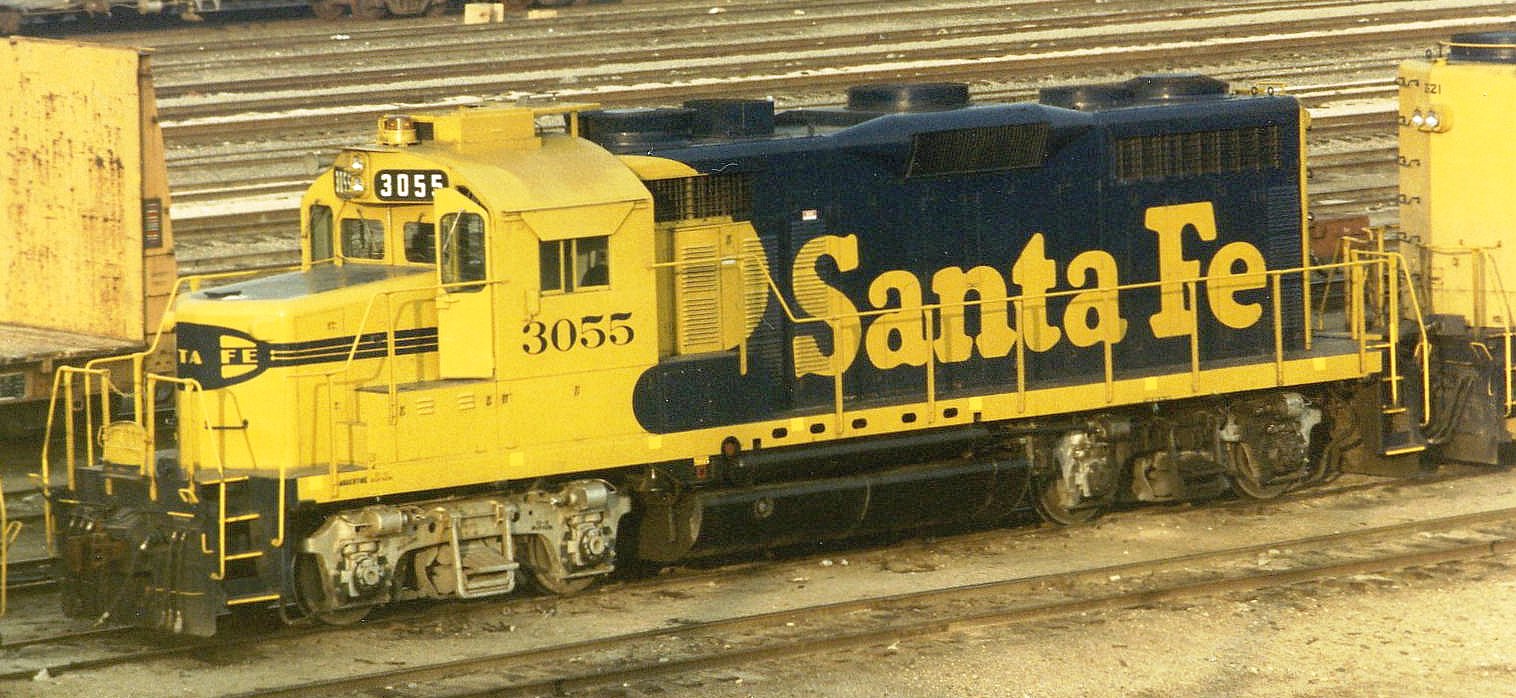
EMD produced the GP20 from November 1959 thru April, 1962. The GP20 is a four axle, 2,000 horsepower road switcher that had sales of 260 units to eight class 1 railroads. The largest purchaser was the ATSF taking delivery of 75 units. 

"File:ATSF 3055 19871200 CA San Bernardino.jpg" by Slambo at en.wikipedia is licensed under CC BY-SA 2.0. To view a copy of this license, visit https://creativecommons.org/licenses/by-sa/2.0/?ref=openverse.

The GP20 was the second EMD locomotive with a factory installed turbocharger following the six axle EMD SD24. The turbo charged EMD 567D2 prime mover in the SD-24 produced 33% more power than the SD-18 that utilized a Roots Blower. However the four axle GP20 only produced 11% more power than the similarly Roots Blower powered GP18 due to traction motor limitations at that time.

A CB&Q SD24 at an unknown location and date but looking very sharp.
"File:Burlington504.JPG" by WuhWuzDat is licensed under CC BY 3.0. To view a copy of this license, visit https://creativecommons.org/licenses/by/3.0/?ref=openverse.

EMD was reluctant to turbo charge the 567D2 prime mover that powered the EMD GP20 and was spurred on by the Union Pacific (30 units purchased) based on their own addition of a turbocharger to their GP9s. These engines would become known as Omaha GP20s.
 
New York Central
The New York Central was a class 1 railroad known for its great steel fleet and extensive passenger operations that included the famed 20th Century Limited. Unfortunately the Central's large post war investment in new passenger trains were causing the RR to hemorrhage money as highways and air travel took much of the post war travel and freight away from the NYC and the RR was in bad financial shape in the late 1950s and into the 1960s. 
"New York Central System" by Phil Beard is licensed under CC BY-NC-ND 2.0. To view a copy of this license, visit https://creativecommons.org/licenses/by-nd-nc/2.0/jp/?ref=openverse.

When RR president Al Perlman took over in 1954 after a nationwide slowdown and bitter proxy fight his first edict to reduce losses was to cut all new diesel locomotive orders in half erroneously thinking  that more mileage could be squeezed out of the existing diesel fleet. This error in judgement would leave the NYC chronically short of locomotives as the economy improved.

In December 1960 car loadings were down 20.5% and down 1.9% for the year 1960. January 1961 didn't start out any better for the Central as car loadings were down 18.9% in January as compared to January 1960 and were down overall by 22.9% in the first quarter. For the fiscal year 1960 car loadings were down 11%. Year end revenue shows a net loss for the railroad of more than 12 million dollars.
New York Central GP20s  
Cash strapped and chronically short of available locomotives the NYC purchased fifteen EMD GP20s in 1961 using a group of FTAs, FTBs, F3As and F3Bs as trade in allowances.

The New York Central's fifteen GP20s were unique in that they were the only GP20s erected without dynamic brakes. The GP20s would be unique to the RR as well ushering in their first low hood road switchers along with the fifteen Alco RS32s that were purchased during the same time.

The fifteen New York Central GP20s were delivered in the summer of 1961 classed by the NYC as DRS11 and numbered 6100-6114. Thirteen of the fifteen GP20s would make it to the Penn Central.

GP20 #6109 was wrecked in December 1963 and traded in for an EMD GP35.

GP20 #6106 was struck by an overhanging flexi-van in August 1965 and scrapped.

The NYC classification system was changed in 1966 for the pending merger with the PRR. The GP20s would be classified as an EF-20 locomotive. E-EMD, F-Freight, 20-2,000 HP.

The NYC thirteen remaining GP20s would be renumbered to 2100-2112 and they would carry this road number throughout their Penn Central careers and into Conrail.

PC 2107 in "pure form" rests at West Mill, NY on PC Ralph's Kings Port Division layout. 
Photo by PC Ralph. Used with permission.

In 1972 the PC was enjoying the economy of the 2,000 HP non turbo charged GP38s and started removing the costly turbochargers from their GP20s. The 2107 remains turbo equipped on PC Ralph's Kings Port Division and is seen crossing Ulster Ave as it works the Kings Port Interchange Track. 
Photo by PC Ralph. Used with permission.

The Models
My three NYC GP20s and one ATSF GP20 are the older pre Walthers Life-Like Proto 2000 Models.

ATSF #3102 was the first GP20 on the roster when I received it as a Christmas present from my mother in law who enjoyed shopping for trains in the mid to late 1990s and liked the colors of this engine.

The 3102 is a good looking engine that has avoided repainting due to its sentimental value. This unit also introduced me to cracked axle gears which at that time I didn't know about or what to do when the wheels were bouncing up and down.

Subsequent purchases in the late 1990s included NYC #6109. The NYC units came with nice details and sans dynamic brakes like the prototype. I painted the handrails and grab irons yellow and highlighted the trucks to better match the 1:1 version.

Unfortunately the prototype 6109 was wrecked in December 1963, (oh what a night!). Having the 6109 in a mid to late 1960s setting has recently started to nag me a bit as I know it wasn't in service and this unit may get a 2100 series number in the future.

The 6107 was my next GP20. By this time I gave up on painting the engineer and fireman as they were a pain in the butt to put back in place.

The 6107 like the 6109 and ATSF 3102 has had all of its axle gears replaced. Since doing that these are now reliable motive power that can pull a lot of tonnage.  

The fourth and final GP20 in the fleet is #2103. Here it is coming out of the shop with new numbers alongside a newly renumbered NYC RS1.This was a used locomotive purchase that was originally another #6109 that I renumbered twice. The first time with PC decals that were too big and the second time with NYC decals that were prototypical. This engine has also had its axle gears replaced. 

The 2103 and ATSF 3102 bring a train into Terminal Yard. Knowing the NYC was short on motive power and leasing units this became plausible for me. The NYC also had a Motive-Power Pooling agreement with the ATSF between Elkhart Indiana-Argentine, Kansas via Chicago so the ATSF unit could also be running off owed miles. 

All four GP20s lug a freight train thru Empire City Station towards Terminal Yard. This is the first time I made up this four unit lash up and lo and behold I really like it. This will get the ATSF unit out of the box and onto the layout much more frequently. 

The GP20s in action!


Additional Thoughts and Comments
From their original date of purchase by the New York Central thru Penn Central and into Conrail the NYC GP20s proved to be reliable workhorses capable of leading the hottest symbol trains for the NYC or running heavy transfer freights in their later PC and CR years. Photographic evidence shows these GP20s remained in service with Conrail thru 1985. 

The P-2000 models unfortunately suffered from the cracked axle gear syndrome that plagued so many of their models. If considering purchasing any of these models be mindful that you may have to factor in the changing of the gears. 

On the plus side once the gears were changed they have run trouble free for 20 years with only some light maintenance like lubrication. Their heavy weight allows them to pull a good amount of tonnage and the short four axle wheelbase is perfect for my layout.

A double plus for me is that while putting this locomotive spotlight together I stumbled onto a really good looking and good running four GP20 lash up!!

NYC GP20s bring a train into Terminal Yard in 1962 and find their EMD catalog replacements, the GP30, on their demonstration tour.

Lightning Stripes are still in and the New York Central GP20s will soon be joined by ten GP30s. We'll check out the GP30s in the next Locomotive Spotlight.

Additional Reading
New York Central Railroad Color History by Brian Solomon with Mike Schafer
Penn Central Power by Robert J. Yanosey.
Penn Central System Bi-Annual by Robert H. Reid
Trains of the 1970s. Kalmbach Publishing.

Prototype Photos
Conrail GP20m #2103 passing thru Allentown PA in 1985 

Thanks for reading and watching!!!
See you soon!!!