
Greetings All,
Welcome back to the New York Central System in Transition
Today we'll take a look at how the NYC positioned itself to take advantage of infrastructure upgrades, track upgrades and the addition of new rolling stock in an attempt to become profitable.

Forward Thinking at a Critical Time
President Perlman addressed the need for cost cutting, improved infrastructure, efficient operations, and reducing labor costs by using both innovative and draconian measures like laying off ten thousand employees to save the railroad.
During this era the New York Central developed a network of super yards across the system. Here is a look at some of them.
Selkirk Yard
Selkirk Yard was modernized in the mid 1960s as a large computerized push button hump facility and dedicated as Alfred E. Perlman Yard. In 1966 it had a capacity of 5,195 cars.

DeWitt Yard
Dewitt Yard east of Syracuse was among the oldest hump yards on the Central. The west bound hump had a 4,980 car capacity. The eastbound hump held 5,855 cars. In the diesel era DeWitt was the primary diesel shop and base for most Alco and GE locomotives.
Frontier Yard
In 1956 the railroad built Frontier Yard east of downtown Buffalo. As the Central's first large electronically controlled hump yard Frontier was designed to supplant eight older facilities. Despite Frontier's 5,140 car capacity several fair sized flat switching yards were still needed to serve local industries.

Niagara Falls
A large flat yard accommodated chemical and interchange traffic moving thru the Niagara Gateway.

Pittsburgh & Youngstown
NYC affiliate Pittsburgh & Lake Erie operated a large yard at McKees Rocks near Pittsburgh.

In 1958 the railroad opened Gateway Yard at Youngstown, Ohio replacing several smaller yards. Gateway was an immense facility covering roughly 200 acres and five miles long. Gateways 35 track hump classification had a capacity for 1,697 cars while its 21 track receiving yard had a 3,076 car capacity. Gateway could process up to 2,700 cars per day.

Collinwood Yard
The railroad's primary Cleveland area facility was Collinwood Yard which featured a large flat switching yard and the primary shops for the railroad's EMD diesel fleet.

Elkhart Yard
In the modern era NYC built two large computer controlled hump yards in Indiana, one on the Chicago mainline at Elkhart and the other on the Big Four at Indianapolis. Elkhart was built on the site of an older yard in 1957 and dedicated to Robert R. Young. Elkhart featured a modern electronic hump with 72 classification tracks and could hold nearly 7,000 cars. It primarily handled traffic moving via the Chicago gateway and classified interchange traffic to many Chicago area railroads making it one of the Central's busiest yards in the 1960s.

Avon Yard
Serving Indiana's largest city Avon Yard also known as Big Four Yard was built in 1960 as a modern hump facility. It featured 53 classification tracks, a 7 track departure yard and a 9 track receiving yard. Avon's primary function was to classify traffic moving to and from the St. Louis gateway.

"Avon Yard on a cloudy day from the east" by JarrahTree is licensed under CC BY 2.5.
CTC and Other 1957 Improvements
Traffic, Hump Yard and Flexi-Van Service.
New York Central Fast Freight
Traditional American rail freight operations were notoriously slow. Before the advent of motorized trucking and paved roads even glacially slow freight was faster than the alternatives. By the 1920s trucks using improved highway transportation began to cut into the traditional Less Than Carload (LCL) business where it was better suited for door to operation.
Pacemaker Service
In an effort to keep ahold of the LCL business the NYC emphasized the Pacemaker as a fast express service that featured free pick up and delivery using NYC trucks. In the early years of service the Pacemakers were assigned Mohawk and Niagara steam locomotives west of the electrified lines as seen below.


Early Bird Service
Pacemaker service survived into the mid 1950s but was deemphasized following the 1954 introduction of the Early Bird Service trains that concentrated recapturing carload traffic through improved scheduling. New York - Chicago service was promised in 29 hours. A cartoon bird with an engineer's cap and pocket watch was featured in advertising the "on time a day early" slogan.

Flexi-Van Service
The Early Bird service was relatively short lived as the New York Central started promoting its Flex-Van trains that consisted of two 40' vans riding on a spine car. The NYC purchased over 7,000 vans and 859 Flex-Van flatcars equipping the railroad to run 50 daily high speed Flexi-Van trains called Super Vans.

The Flexi-Van trains were very profitable for the NYC. Unfortunately few other roads embraced the technology (Milwaukee Road and Illinois Central were two exceptions) and the Flexi-Vans became a largely NYC only captive phenomenon.

With the need to interchange this traffic and ensure an availability of such equipment in 1964 the Central bought into the Trailer Train consortium.

The Road to the Future
Starting in June,1959 NYC boxcars began to receive the cigar band style herald (also known as the road to the future herald) that was approved earlier in the year by the Board of Directors. The cars were painted Century Green with black ends and roofs. In 1963 the cars started getting full Century Green paint and smaller heralds.

Cigar Bands replace Lightning Stripes
Around the same time to save money when the locomotives are shopped and repainted the dashing Lightning Stripe paint scheme is replaced by the austere Cigar Band scheme featuring the road to the future heralds.

"Two New York Central E8As at Hudson, NY" by railfan 44 is marked with Public Domain Mark 1.0.
Recovering, Maintaining and Expanding the Customer Base
The Automotive Industry
While the automobiles on the interstates eroded the passenger car loadings the Central profited greatly by supplying equipment and motive power to haul the products needed to manufacture and ship finished automobiles.
Boxcars dedicated to automotive service started to appear in 60' and later huge 86' Hi Cube boxcars featuring four or eight doors as specified by the auto manufacturer. NYC 53051, a PCCM regular, was part of an 85 car order (53000-53084) delivered in 1963 by GSC under lot #932-B

Below are two 60' boxcars that were part of an 81car order (56451-56531) built by built by Pullman Standard in 1966 under lot #985B assigned to the Monroe, MI pool as noted by the small writing to the left of the door.


Auto Racks Revive Automobile Shipping
Replacing the cumbersome 50' boxcars that could hold four automobiles with tri level auto racks that could hold fifteen cars and bi level auto racks that could hold 10 cars or light trucks brought this profitable traffic back to the rails.NYC 64413 was part of a 500 car order (64000-64499) built by Despatch Shops Inc. in Rochester, NY in 1941 under lot #701-B.

The New York Central rostered many of the 89' bi level and tri level auto racks built by Pullman Standard (MDAX and KTTX reporting marks) and American Car & Foundry (NIFX and MDX reporting marks) starting in 1961.

Other Innovations
Evans Breadbox Trough Coil Coaches
P&LE 42278 and 42279 were part of 50 car order (42250-42299) built by Evans in 1967 under lot #111-F. The cars were designed so a single person could open and close the coil covers. The covers however proved to be troublesome from wear and tear and rough handling and were later removed.

55' Coil Steel Flatcar
NYC 752034 was part of a 100 car order (752000-752099) built by Evans in 1965 under lot #984-F. These cars had the more traditional angled coil covers installed and removed by cranes.


The Stretch Program
In 1966 with the need for larger boxcars New York Central's Beech Grove Shops rebuilt and stretched 800 40' boxcars into 50' boxcars under lot #992-B The stretched cars carried road numbers 150000-15799.
Other Specialty Freight Cars
NYMX Mechanical Refrigerators
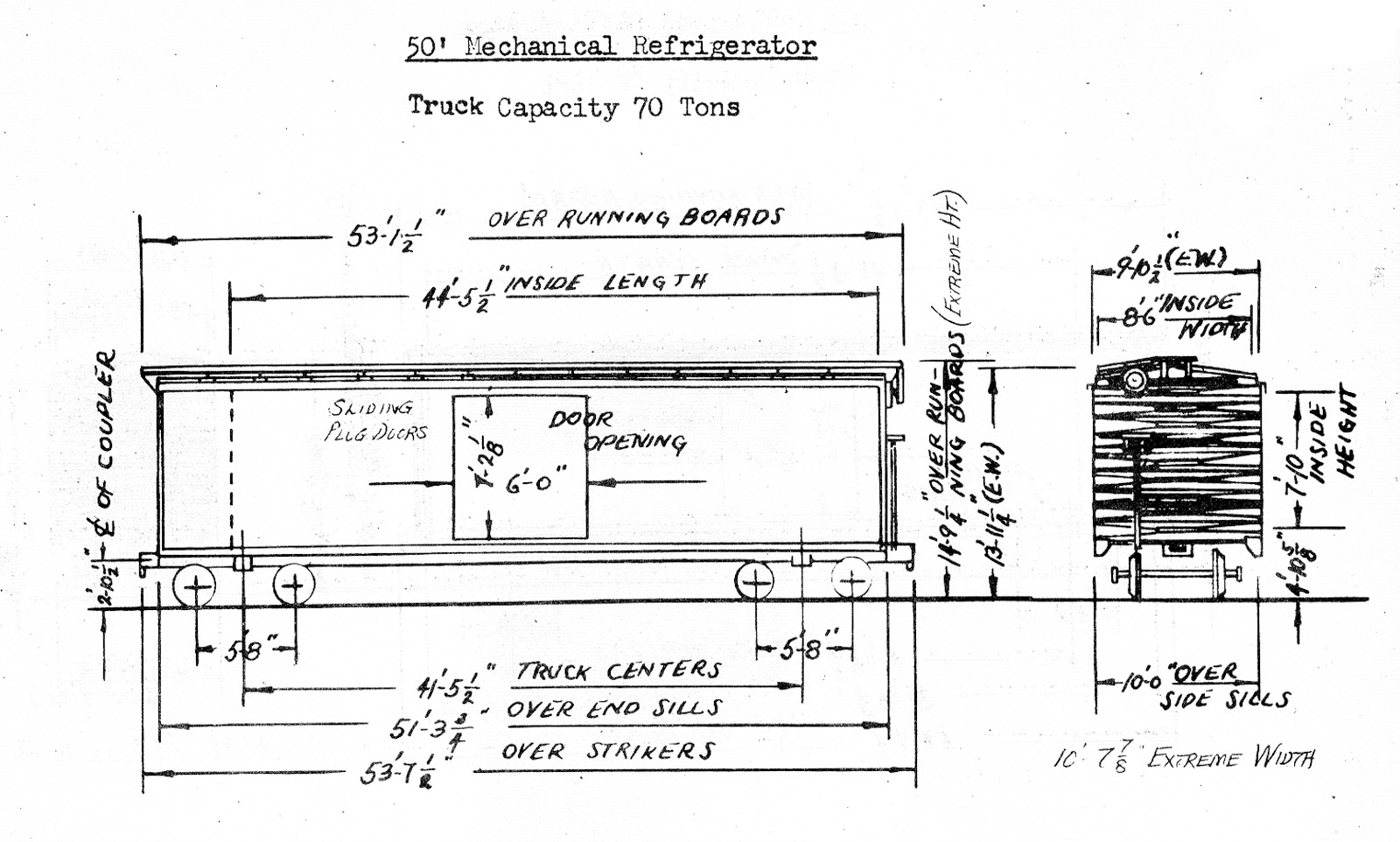
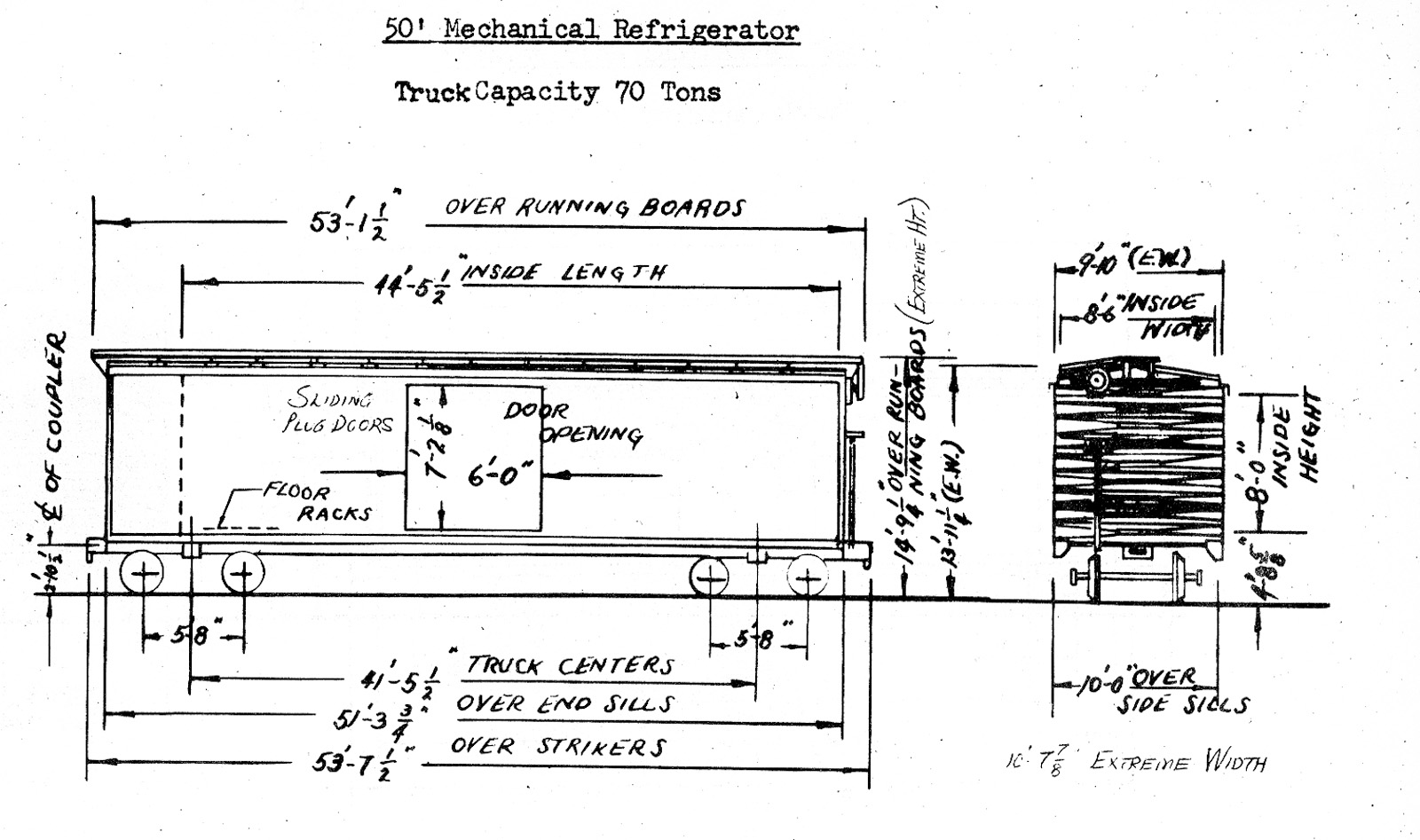
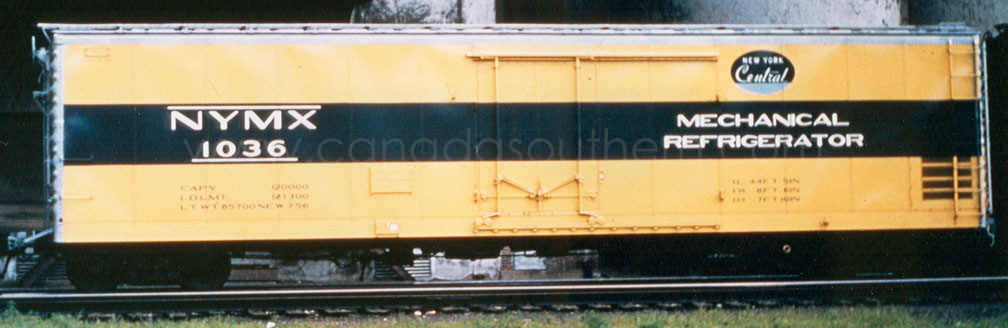
The NYC purchased 50 mechanical refrigerators built by Pacific Coast & Foundry in 1956 under lot #562 and 562A. The cars were numbered 1000-1049.

NYRX Bunker Less Refrigerator Cars
The NYC also added 100 RBL reefers built by Despatch Shops Inc. in 1958 under lot #936 with NYRX reporting marks and an Early Bird Logo on the sides. The cars were all steel numbered 2500-2599 and looked a bit like this wood side MDT reefer.

Flexi-Flo Covered Hoppers
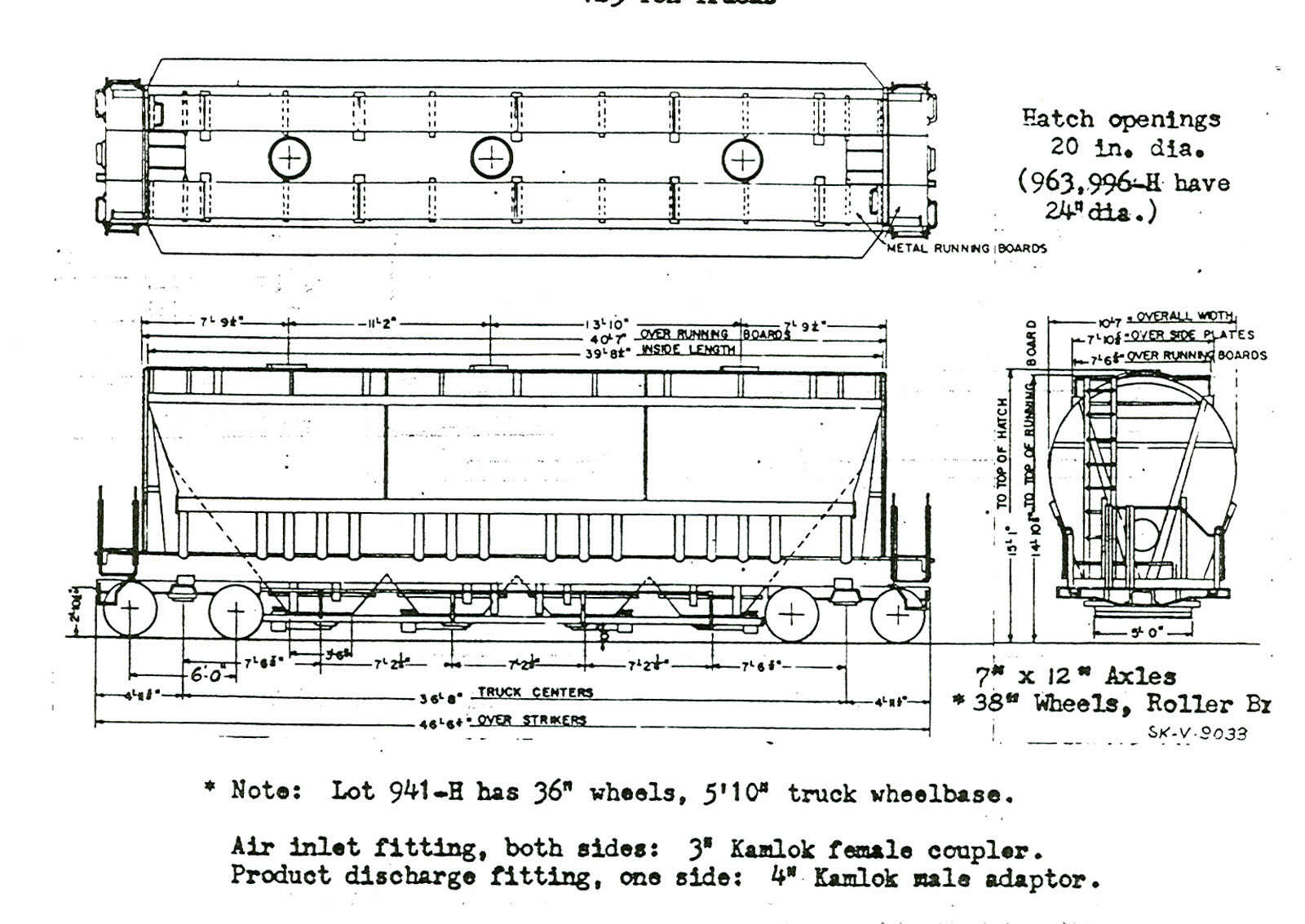
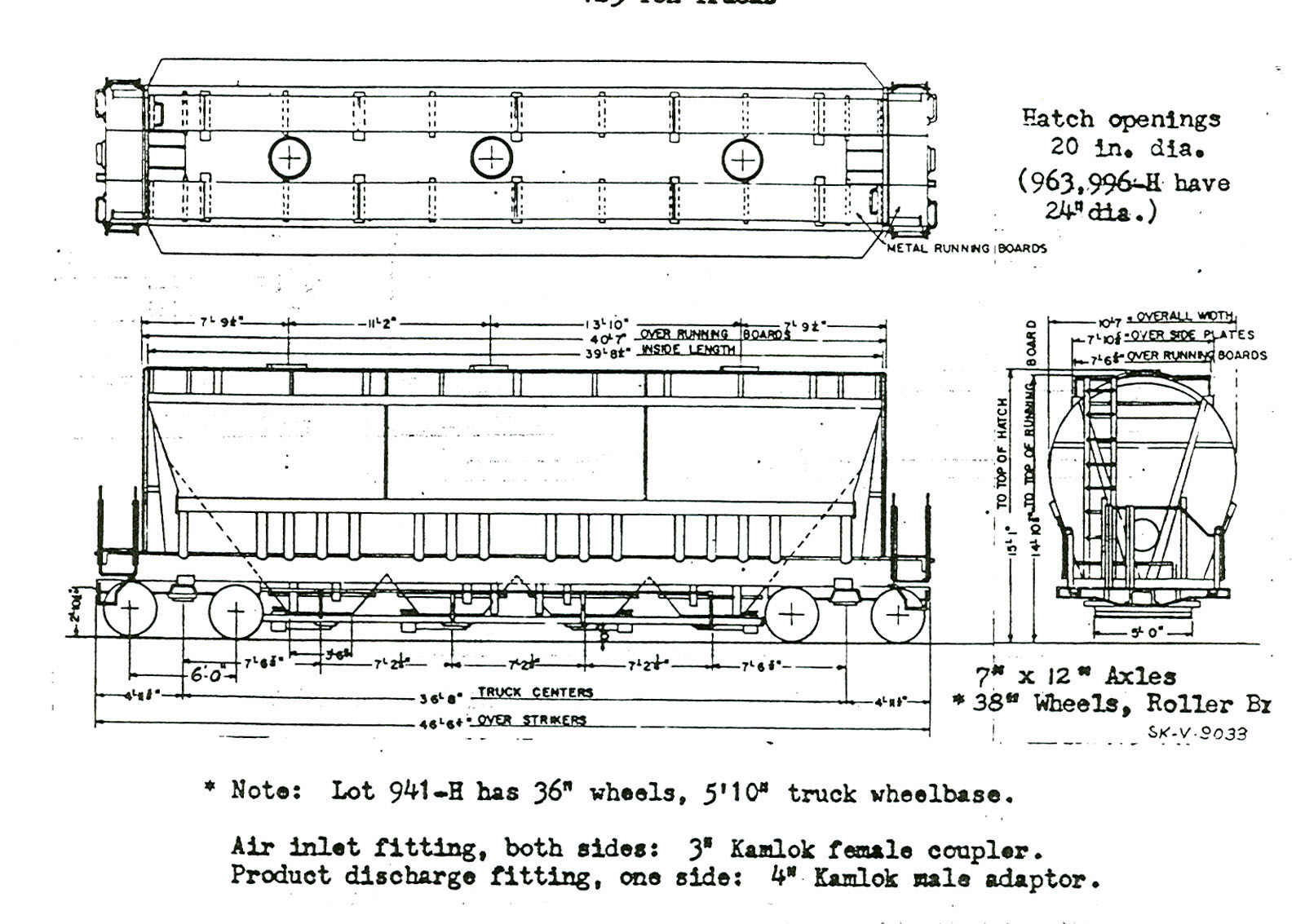
In 1965 American Car & Foundry delivered 75 Flexi-Flo covered hoppers to the Central under lot # 963-H. These cars were numbered 885825-885899. In 1966 the Milton Company built 120 Flexi-Flo covered hoppers for the NYC under lot #996H. The cars were numbered 885680-885799.
100 Ton Covered Hoppers
Starting in 1964 the New York Central ordered 97 three bay covered hoppers with a capacity of 4.650 cubic feet from American Car & Foundry under lot #945-H. These cars featured circular hatches, were built to Plate C standards and carried road numbers 886000-886096.
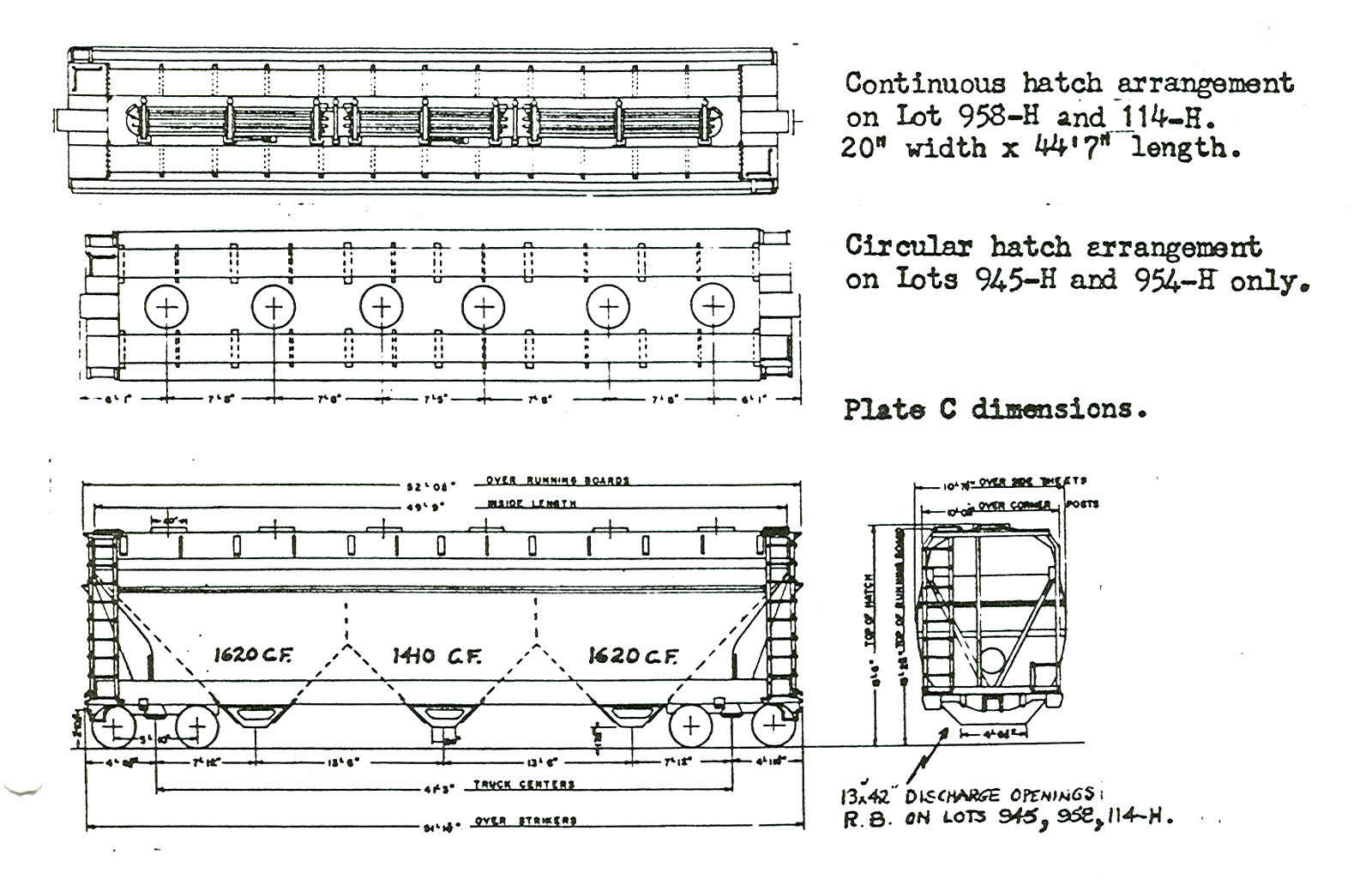
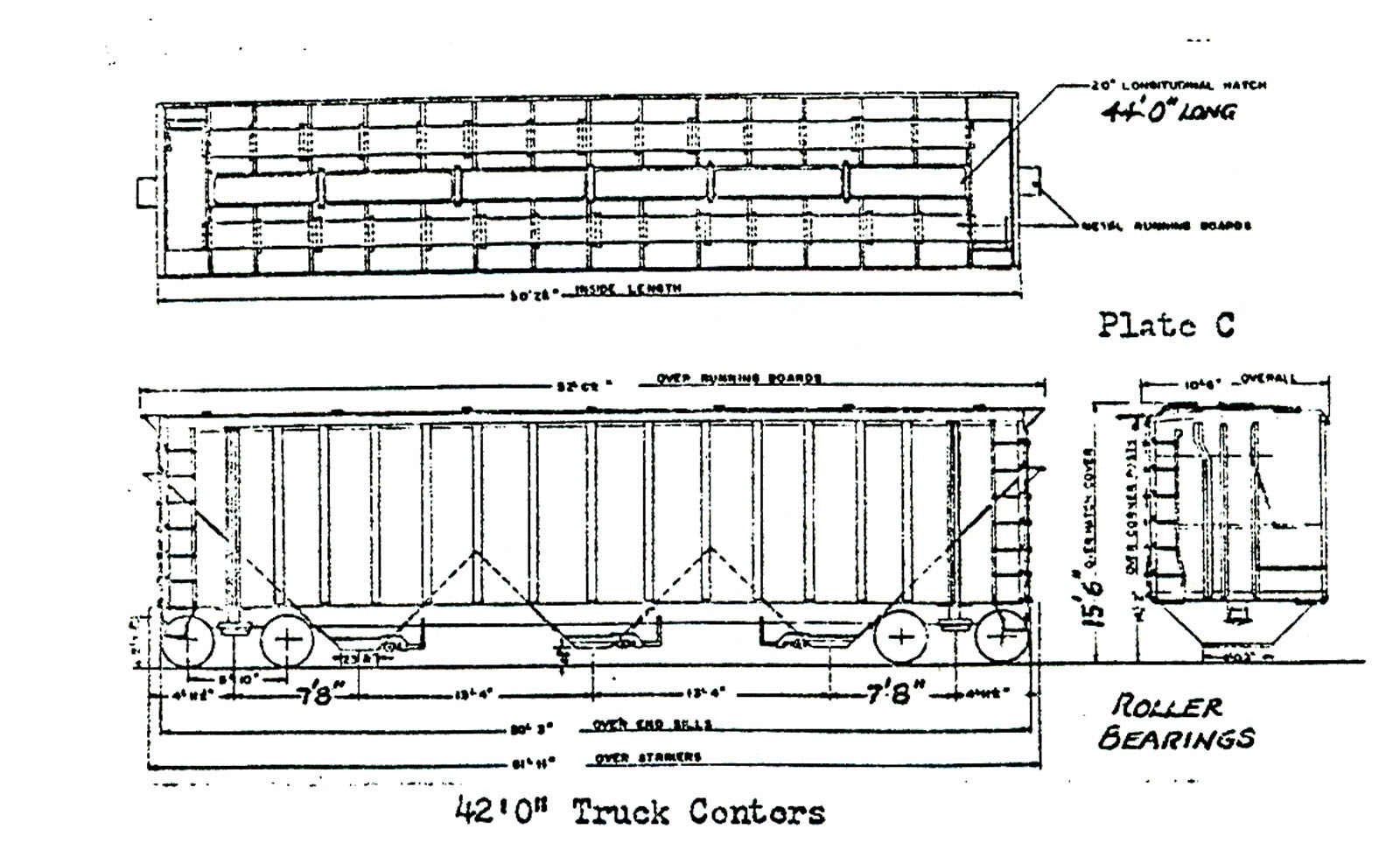
In 1965 GATC built 50 three bay covered hoppers with a capacity of 4700 cubic feet under lot #946-H. These cars had exterior posts, continuous hatches and were also built to Plate C standards. The cars carried road numbers 886176-886225.
Other Covered Hoppers
NYC 886813 is part of a 100 car order (886726-886825) built in 1967 by ACF under lot # 114-H. The prototype however had continuous hatches, not circular hatches and three bays not four like this model.


Insulated Boxcars
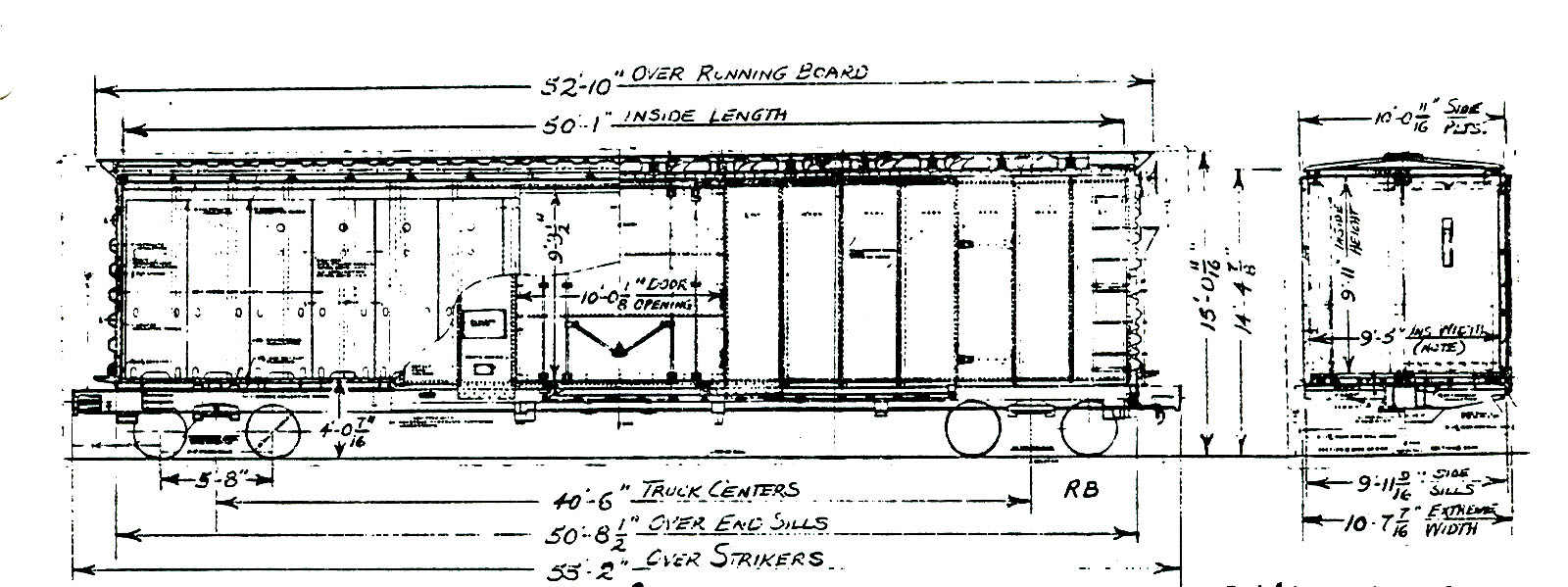
NYC 78746 was part of a 50 car order (78700-78749) built by Despatch Shops in 1964 under lot #976-B.
 NYC 78798 was part of a 50 car order (78750-78799) built by North American in 1964 under lot #953-B. The cars in this group were assigned to Corn Products Company service.


Non Revenue Equipment
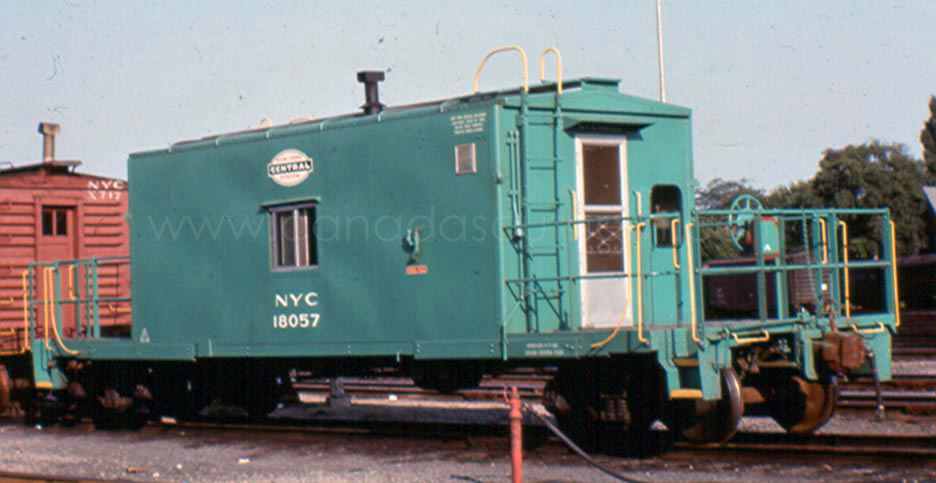
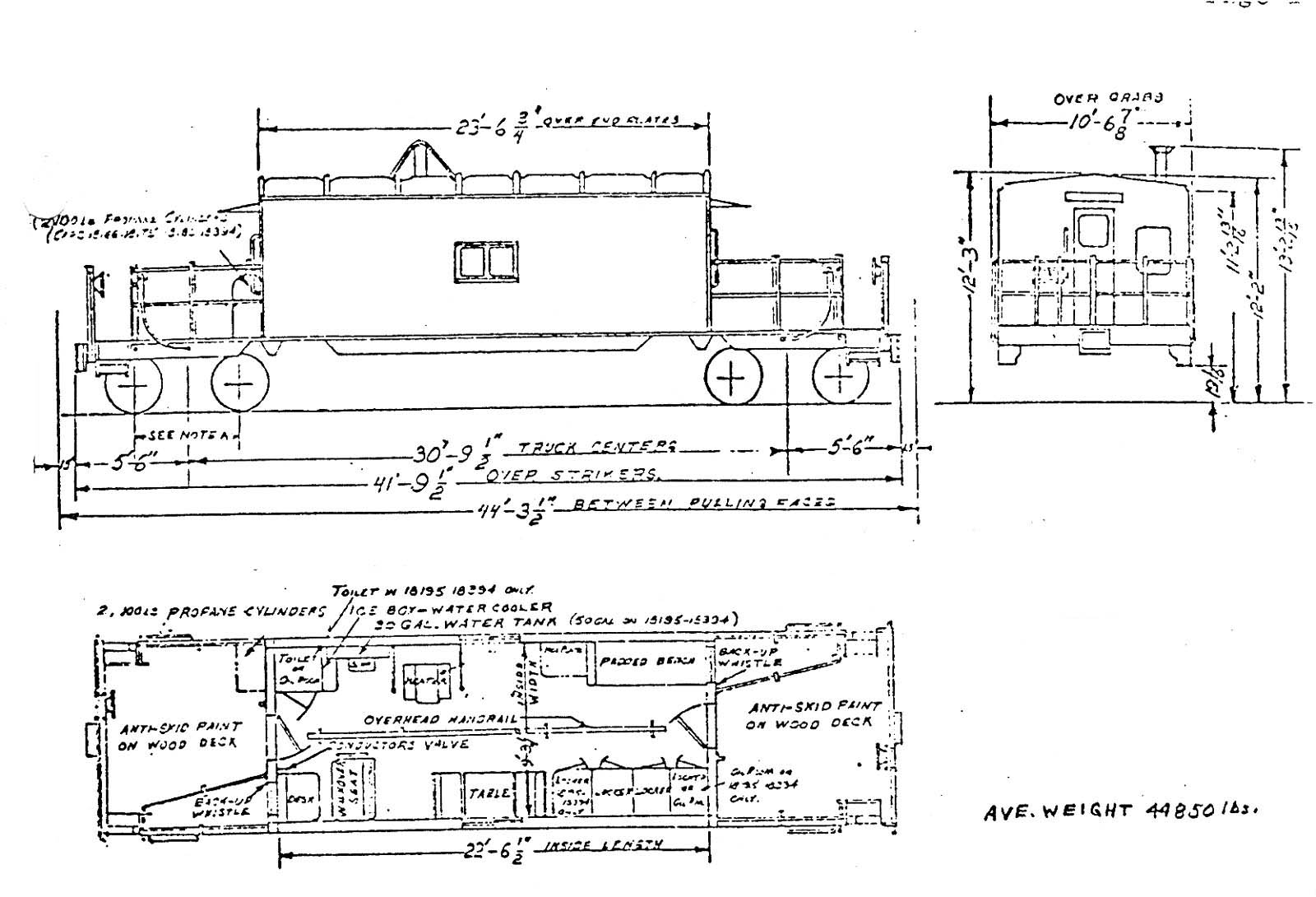
In the 1960s the New York Central sought to replace its aging wood caboose fleet with new steel cabooses for transfer service. NYC 18087 is part of a 50 car order (18056-18105) built in 1966 by Despatch Shops under lot #977. The cars in this lot were converted from Lot #703-F boxcars.

Closing of Part 2
We'll close it out here for today. The New York Central System has upgraded its physical plant with improved track, centralized traffic control, state of the art super yards and new rolling stock to better meet the needs of their shippers. What the NYC needs to do now is provide reliable motive power to deliver the goods so to speak. We'll see how that went in our final installment that will be posted tomorrow.Thanks for reading!!!
See you tomorrow!!!
Another great post with a wealth of information! It's impressive that you have most of the rolling stock that you mention on this post. Interesting that the Flexi-Van service didn't take off. The NYCTL should benefit immensely and I'm looking forward to seeing how you apply some of this.
ReplyDeleteThank you very much Sir Neal!!! Glad you are enjoying the series!!
DeleteDang John! That was a very thorough and interesting review of the New York Central's efforts to remain competitive and innovative in the 50s and 60s! Your extensive collection of rolling stock nicely illustrated your examples! I especially like the steam and later diesel version of the Pacemaker train! I appreciated the tour of the major yards as a reminder to reference some of them in our virtual ops. The Periscope film was fun and informative and included some great scenes from the era! I didn't know that the Flexi Vans were loaded with a pivoting mechanism. That was brilliant! Nice shots of the dispatcher panels, hump, and classification yards too! Your installments are creating an excellent primer for the New York Central railfan and modeler!
ReplyDeleteThank you for the compliments Ralph!!! Glad you are enjoying the series!!!
Delete